Feeling Off but Not Sick? Your Symptoms Are Telling You Something.
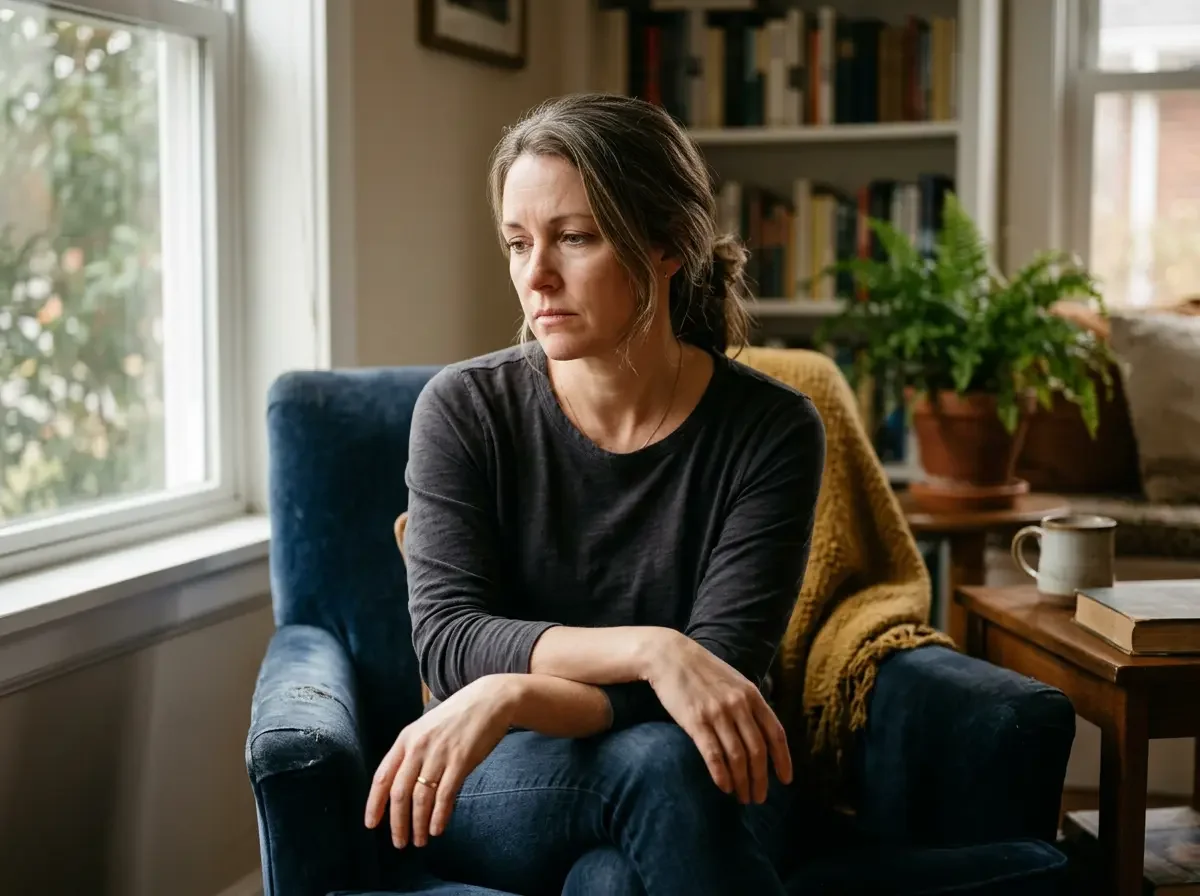
You know your body. You know the fatigue you're carrying isn't fixed by a good night of sleep. But when labs come back within range and a provider says everything looks fine, it can feel like you're being asked to accept that what you're experiencing doesn't count. It does count.
Last updated: April 21, 2026
There is a particular kind of exhaustion that comes not from being sick, but from not being believed. You know your body. You know that the fatigue you are carrying is not fixed by a good night of sleep. You know that the brain fog, the mood shifts, the sense that something is simply off, are real. But when labs come back within range, and a provider says everything looks fine, it can feel like you are being asked to accept that what you are experiencing does not count.
It does count. And you are not alone in having been told otherwise.
Across the country, women are increasingly making a different choice about how they receive primary care. Not because they have given up on medicine, but because they are looking for a version of it that actually works for them.
Why Women Leave Traditional Primary Care Feeling Unheard
The structure of conventional primary care is not set up to support complex, nuanced presentations. A 15-minute appointment slot, sometimes as short as seven minutes in high-volume practices, does not leave room for the kind of history-taking and conversation that women's health concerns often require.
The consequences of that time pressure compound a longer-standing problem. Medical research has historically centered on male subjects, which means diagnostic criteria for many conditions reflect how those conditions present in men. Heart disease. Autoimmune disorders. Endometriosis. All are conditions where women are routinely underdiagnosed or misdiagnosed, not because providers lack skill, but because the frameworks they were trained on were built from incomplete data.
When a woman presents with fatigue that does not resolve, cognitive difficulty, or mood changes without a clear situational cause, these symptoms are more likely to be attributed to stress or anxiety than investigated as potential signals of something systemic. Researchers have started calling this pattern medical gaslighting. Women who experience it repeatedly sometimes disengage from healthcare altogether, which carries its own serious risks.
The problem is not a shortage of good physicians. It is a structural mismatch between what standard care delivery offers and what women's health actually demands.
What Concierge Primary Care Actually Changes
Concierge medicine is sometimes described as a luxury add-on, which misrepresents what it actually is: a different care model with a different set of priorities.
The most immediate difference is time. Where a traditional appointment might run 15 minutes, a concierge visit typically runs 30 to 60 minutes. That additional time is not incidental. It changes what is possible in a clinical encounter. A provider who has 45 minutes with a patient can ask follow-up questions, explore context, connect the dots between symptoms that might seem unrelated at first, and actually listen. That is not a minor adjustment. It is a fundamentally different kind of care.
Beyond appointment length, the concierge model restructures access. Patients have direct communication with their physician by phone, text, or email, rather than routing requests through a front desk and waiting days for a callback. Same-day or next-day appointments replace multi-week waits. This matters enormously when a symptom changes or a new concern arises and a woman needs to reach someone who knows her case.
The model also shifts the orientation of care from reactive to proactive. Rather than addressing problems as they become acute, a concierge physician has the capacity to monitor trends, run preventive labs, and identify patterns before they become crises. For women managing perimenopause, chronic fatigue, autoimmune conditions, or other complex presentations, longitudinal attention makes a real clinical difference.
Dr. Loree Koza, DO: A Different Standard of Women's Primary Care
Dr. Loree Koza is a board-certified family physician at Manifest Health Concierge Medicine in Lafayette, Colorado. With more than two decades of practice, she has built her model around the kind of primary care she believes women deserve: unhurried appointments, direct access, and clinical relationships that deepen over time.
Dr. Koza holds certification from the Menopause Society, a credential that reflects specialized training in one of the areas where conventional primary care most consistently falls short. Perimenopause and menopause are transitions that involve the whole body, affecting cognition, mood, sleep, cardiovascular health, bone density, and more. A provider who understands this breadth can recognize those effects when they appear, rather than evaluating each symptom in isolation.
Her practice spans internal medicine and family medicine, with particular depth in women's health, hormone management, and preventive care. She cares for multiple generations of families, which means she often has context that spans years and sometimes decades. That history informs clinical decisions in ways that a first or second appointment simply cannot replicate.
Patients at Manifest Health have direct access to Dr. Koza by phone, text, or email, and can typically be seen the same or following day when something urgent comes up. Appointments are long enough to matter. When you have an hour with a physician who knows your history and takes your symptoms seriously, the entire experience of receiving care shifts.
What Women Are Actually Looking For
When women describe what has been missing from their care, the list is consistent. They want to be taken seriously. They want enough time to explain what is happening without being interrupted or redirected. They want a provider who will investigate a symptom rather than reassign it to a psychological category. They want to understand what is being done and why.
None of these is an unreasonable expectation. They are the foundation of good medicine. But delivering on them requires a care model structured to allow it.
The unexplained fatigue, the brain fog, the mood changes that do not have an obvious cause, these are not inevitable parts of being a busy woman. They are signals worth investigating. A physician with the time and training to evaluate them properly can often find answers, and when the answers require ongoing management, a sustained clinical relationship makes that management more effective.
The Case for Choosing Care That Actually Fits
Concierge primary care is not the right model for everyone, and it is worth being honest about that. It involves a membership fee structure that traditional insurance does not cover. That is a real consideration.
But for women who have been cycling through rushed appointments and leaving without answers, who are managing complex symptoms across multiple body systems, who have felt dismissed by providers who did not have the time to engage fully, the concierge model offers something that is genuinely hard to find elsewhere: a physician who knows you, has time for you, and has the clinical background to serve you well.
You shouldn't have to convince your doctor that what you're feeling is real. Dr. Koza offers concierge care built around women who deserve real answers, not just a clean chart.
Call: 720-439-4002